Thursday, October 26, 2006

The Rest of Hyderabad

Here are some pictures from Hyderabad, the rest will be up on flickr.

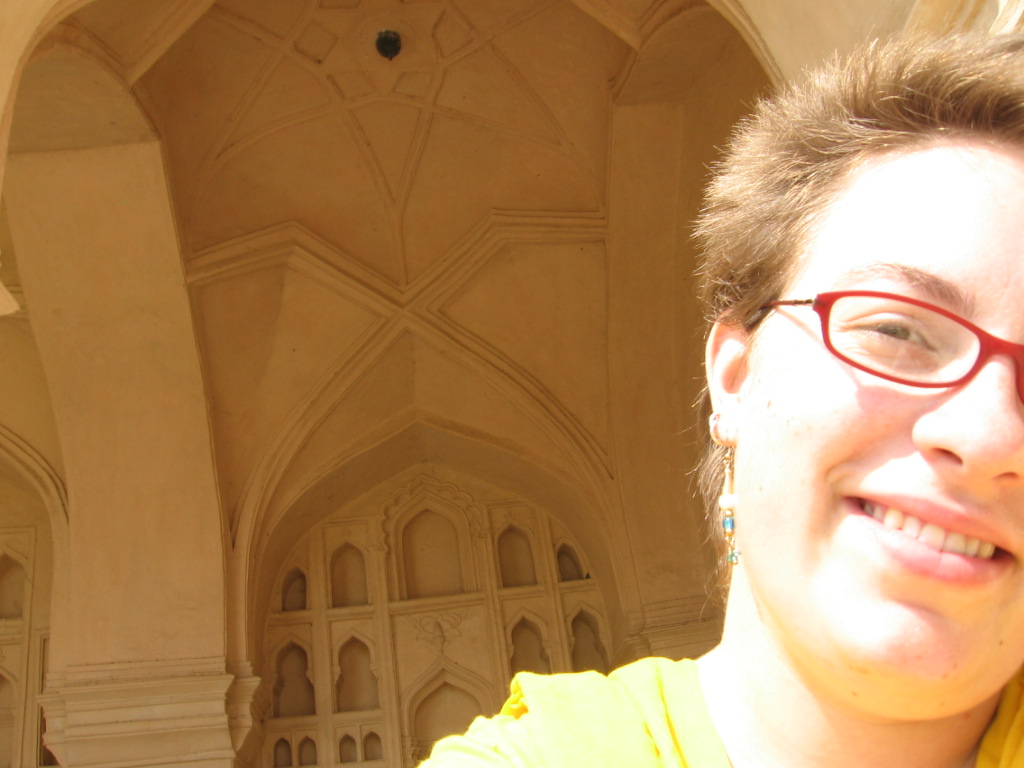
Self Portrait in the Queen's Mosque


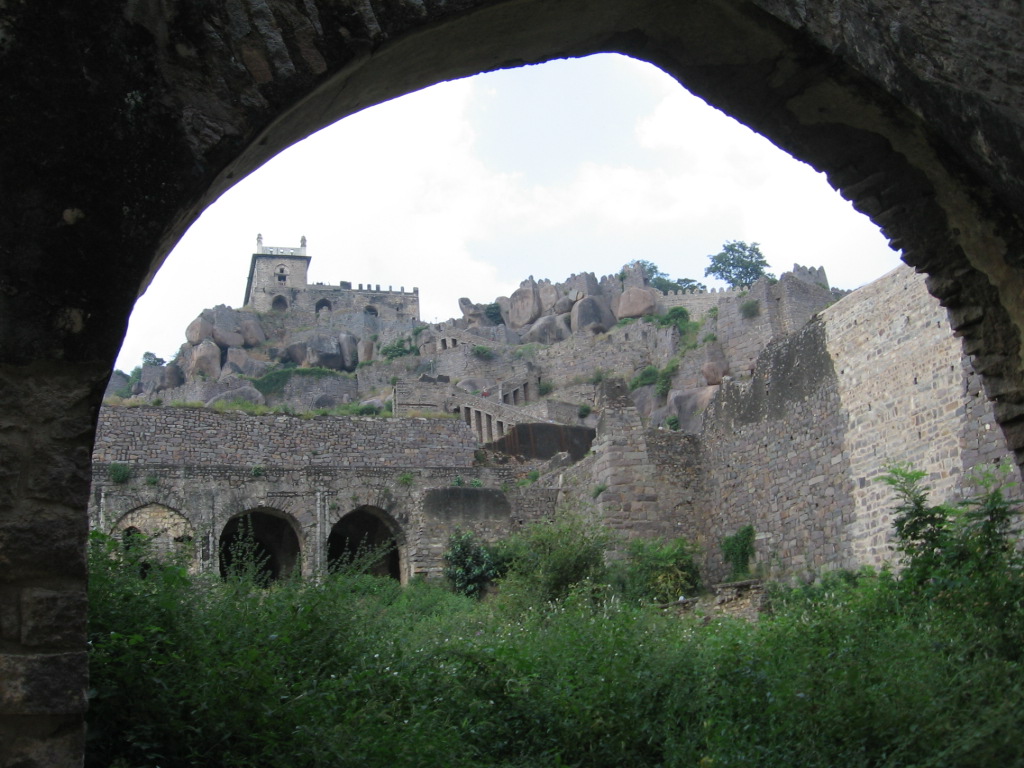
A view from inside Golconda Fort


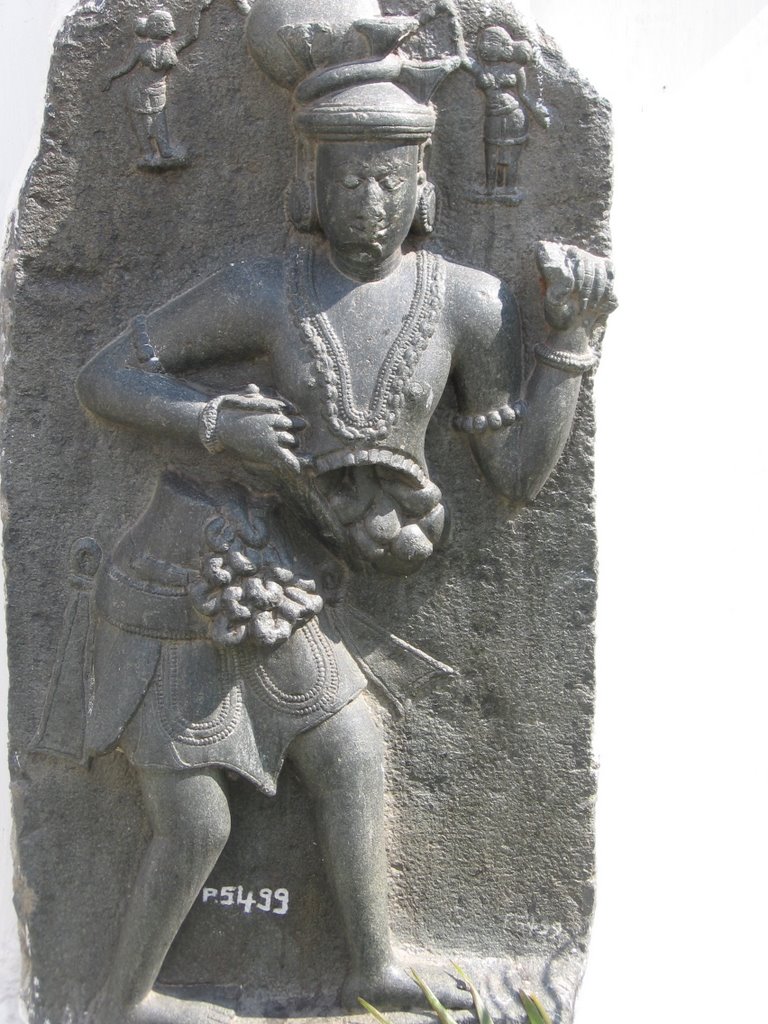
Hero Stone from the Archaeology Museum in Hyderabad

Monday, October 23, 2006

Happy in Hyderabad

*retyping a lost post sucks. That's all I have to say.*
The guidebook says Hyderabad is a city of contradictions. Old and new, Hindu and Muslim, rich and poor. They are right. Hyderabad is in some ways the most modern city I have been to in India yet. ATMs on every corner. Rampant consumerism, malls areas with flashing lights reminiscent of New York City. But at the same time there are things that lag behind. For one the garbage problem is still there. On the small street on which my hotel is located, there is a giant garbage pile which is generally smoldering or fully on fire. Its smoke fills the entire street. And despite signs every few feet along the walls that prohibit urination and defecation, people still regularly squat down in the gutter and just "go". The signs even threaten a 50 Rupee fine, but people regularly ignore it. There is less sexual harassment here though, which is a step forward. Some younger women wear jeans, tank tops, and tight t-shirts without being harassed. So that's great. On the other hand many women also wear Purdah, which the guide book claims is mostly to avoid harassment. I'm not certain that they're right, but it certainly makes for visual contradictions to see women in tank tops and jeans, and women covered head to toe in draping black fabric.
One of the contradictions, Hindu and Muslim definitely has a traumatic history which is being relieved even today. The clashes took place decades ago, but the animosities between Hindus and Muslims living in close contact are still evident. On the bus today I saw an "heated conversation", you might call it, between a Hindu man and a Muslim man over who had the right to sit in the seat. But so far as I could tell it was really not about the seat at all, but rather the expression of pent up anger and frustration. I guess if shouting and arguments on the bus are the manifestation of these hostilities it's better than the communal rioting that took place here in the past.
I did have one good "inter-cultural" experience. Yesterday, when coming back from the Laad Bazaar and Charminder, I caught an auto with a Muslim auto driver. Initially he was talking to me in Hindi and very broken English about how my god and his god are all one Allah. And I said Yes. But mostly I didn't understand a word he said. Then I said something to the effect of "I don't know Hindi" in Tamil, and he answered me in Tamil. It turns out he is Tamil, and has been living in Hyderabad for the past 20 years. He converted to Islam 25 years ago, and moved to Hyerabad, married a Hindi speaking woman and has 5 children. He converted to Islam from Hinduism, and was very sincerely enthusiastic about his religion. So he starts asking if I have read the Koran, and I said No. Then he asks me if I will read it, and I said Yes. Finally I promised him I would read the Koran (something I should do anyway) and he was very pleased. Then he started asking me about marriage. A common line of questioning. I told him I am not married yet, don't know when I will be, or to whom, and my parents will not arrange it for me. So then he told me I should marry an Indian Muslim and convert to Islam. I said something to the effect of "Maybe, you never know what will happen." And he was very happy about this too. By the time we arrived at my hotel he was calling me his younger sister and offering to arrange my marriage. I declined that offer. Then he offered to send me a copy of the Koran, and I told him he could do that, I would certainly read it. He wanted my phone number which I declined to give, but gave the Institutes address so he can mail me a copy of the Koran. Then he told me not to pay him for the ride.
If he does send me a copy of the Koran (in English) I really will read it. As I think many Americans (or at least the liberal ones) are now thinking, I need to learn more about Islam and understand it better if the world is going to become a better place, with less hatred and more understanding.
On another topic completely, yesterday I went to the Archaeology Museum here in Hyderabad, and saw their very lovely collection of Bidriware, Chinese pottery, Hindu sculpture, and bits and pieces of Buddhist stupas. While there I was wondering around the courtyard and saw an office with a sign that said NO ENTRY, but the walls were lined with books. So I poked my head in the door and said "Are you the archaeologists?" and the woman sitting there said yes. She turned out to be Dr. Suguna Sharma, an archaeologist who was working on textiles and patterns. So we talked for a little while and had tea, and she referred me to Dr. K.P. Rao, at the Hyderabad University. His was a name I thought I recognized, and indeed he is the author of the book Deccan Megaliths (1988, Sundeep Prakashan, Delhi), which I have often cited. So she gave me his contact information, and this morning I called him on the phone and asked if I could meet him. He proposed this afternoon, and so I went by bus to the campus (18 km away from the town) to meet him.
Dr. Rao turned out to be a very friendly man, and very helpful and interesting to talk to. He gave me copies of many of his articles, and allowed me to look at and photograph some of the pottery from a megalithic site that he has been excavating recently. He also said that when he goes for field work I can join him and participate in surveys and excavations and the like, whatever he's doing next summer. To top it all off he said I can come back and do some analysis of pottery and human remains from his recent excavations. It's all very future and tentative, but I'm still thrilled and excited nonetheless.
I have been doing some sightseeing too, and will post those pictures soon.

Thursday, October 19, 2006

Systems to prevent voter fraud

Voter fraud is a problem. It has always been a problem (as long as democracy has existed), and I'm sure it will always be a problem. A while ago I saw a news story in the form of video of a man testifying before the US Congress that he was hired to create a program to hack the computerized voting system in Florida. He claimed that as he understood it, he was writing this program so that future attempts at fraud and hacking could be more easily identified. I paraphrase: "It only took a few lines of code to insert a few extra thousand votes on whichever side you wanted them to be."


India has another sort of problem all together. For one they use paper ballots with pictures for the different parties and candidates. This results in several problems which are equally difficult to solve. The Indian press has been reporting on these problems and the government's efforts to solve them. One significant problem are armed gangs coming with fake ballots to stuff the ballot boxes. This has been solved with each of the voting centers being heavily guarded with armed police. So what if it feels like martial law when you go to vote. All those men with guns are there to protect democracy...


Another problem involves tampering with votes after they have been cast. For that they put giant padlocks on the metal boxes in which the votes are placed.


The third and perhaps most serious problem you might think would be individuals who attempt to vote more than once, or at more than one voting station. Since many people here don't carry government identification (there are no ID cards like drivers licenses that people carry regularly) instead the resort to a semi-permanent form of body modification. Like a club in New York, or a theater where they stamp your hand, once you have cast your one and only vote, they put a plus sign in ink on your finger and fingernail. Since there are multiple elections, for district representatives, ministers, etc., they reserve different fingers for different elections. In this way they mark you as a citizen, as one who has legally and rightfully participated in the democratic process.


In some ways it seems silly. In America we have computers for that, and you can only vote at your registered center where you are listed on a roster. You have to present proof of identity, but in the end they don't mark you in any way. And yet marking seems like a good idea. That way you can see who cares and who doesn't. On election day if you run into your friends, and you don't see black ink on their fingernail you can chastise them, and tell them to go participate in their democracy. That's what Democracy is supposed to be for. For that matter maybe it should be a tattoo. A small one, to be sure. But still, a small unique mark for each year that you vote. How brilliant would that be?

Video of the congressional testimony on vote machine hacking.
A poet and a saint (and a woman)

This most recent weekend we took a trip to the temple in the town of Srivilliputhur, about an hour away from Madurai. The temple there is dedicated to the saintess and poet Andal, who wrote bhakti devotional poetry about the Lord Rangunathan, an avatar of Vishnu. The temple there was built in the Nayak period (14th century) and had exquisitely beautiful stone sculptures of which I took an excessive quantity of photographs. There isn't much else to say about it, so instead I'll refer you to my Flickr Page.

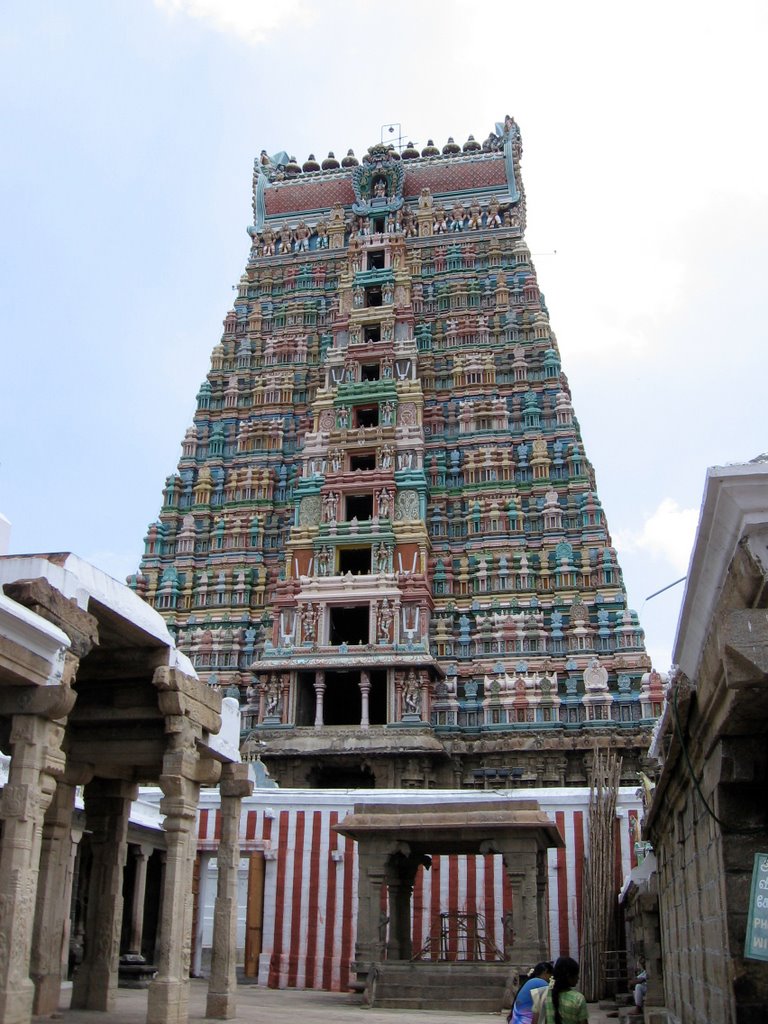
The Temple Gopuram
The main gateway or gopuram at the temple in Srivilliputhur.

Monday, October 16, 2006

No Wonder the British Preferred the Hills

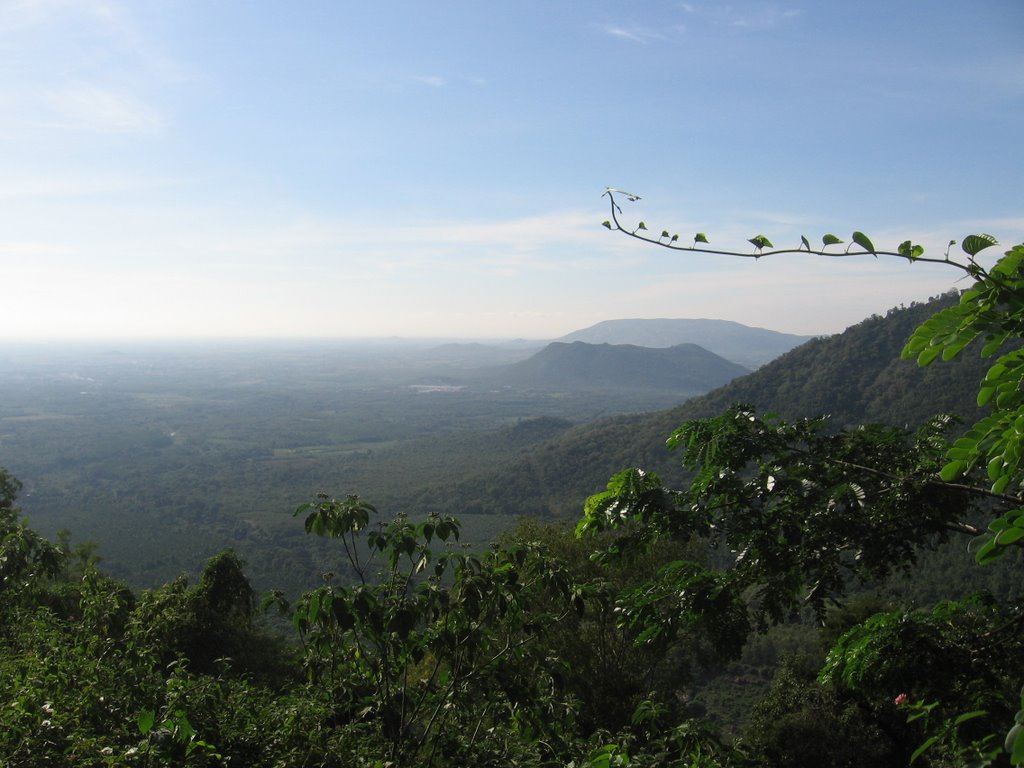
View from the train going up the mountain to Ooty

Ooty is one of the most beautiful places in India. It was one of several important "hill stations" built by the British to avoid the heat and dust of the plains. The Nilgiris in general are unbelieveably beautiful. And I was fortunate enough to live there, in a town called Lovedale, for 3 months several years ago. This past weekend I went to Lovedale to visit the friends that I made there. Because of it's beauty and temperate climate, the Nilgiris have long attracted outsiders. Including the British, but also North Indians and various European expats.

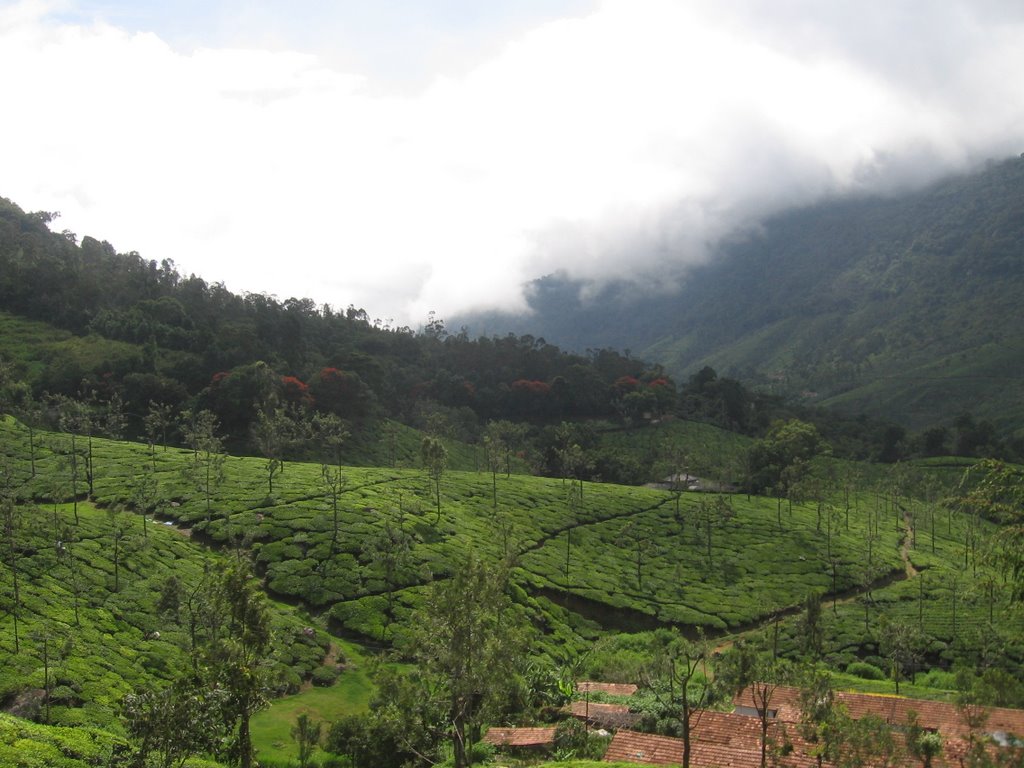
Tea plantations in the clouds and fog.


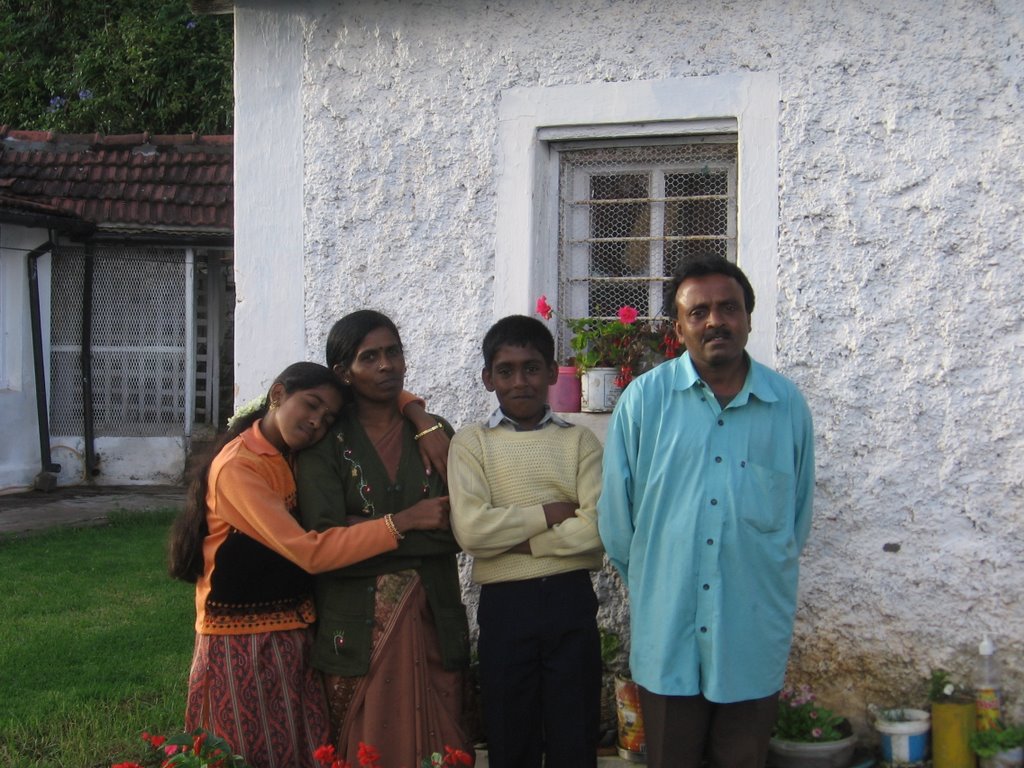
The result is that a North Indian woman and her husband moved down to Lovedale to retire. After he passed away she decided to start a school. She hired teachers including my friend Josephine, to teach in this school. After a few years she got tired of running the school and closed it down. Then she offered Josephine a job as her house servant, gave her and her family (husband and two children) a single room to live in. This room is attached to a three room cottage which she rents out, often to foreigners, such as myself, which is how I became acquainted with Josephine and Lovedale. Recently she added a kitchen on to the one room, so that now Josephine and her family have one room for sleeping, plus a kitchen.

What is worse than having to be a servant, is being treated like one. And that is the tragedy of the situation. "Leela" is her pet name for Josephine, and she shouts it at the top of her lungs whenever she wants tea.

So when I went to Lovedale to visit this weekend I decided to do something to try to help improve their lives. Josephine's husband is an Auto rickshaw driver, (like a small three wheeled taxi, if you've never seen one), but business is rough and he doesn't own his own auto. Most of his earnings go to pay the rent on the auto itself. Also, these days many auto drivers have cell phones, which allow them to maintain regular customers. Raja (that's his name) wasn't able to compete. So on top of the birthday presents for Cinderella, I bought them a cell phone and a subscription to service for life. All they have to do is pay 50 rupees every 6 months to keep it active. My good deed for the week.

If I wanted to here, I could go on and on about the not-nice deeds of the rich woman who employs my friend. But suffice it to say she does not treat her as an equal, and barely as another human being. It is not slavery, to be sure, but the analogy can be drawn.

And yes, Cinderella really is her name. I'm not sure if Josephine knows the American story or only heard the name somewhere, but she named her daughter, her eldest child Cinderella. And despite the fact that both her parents are still living, this real life Cinderella lives in almost as tragic circumstances. All I can say is that I hope her prince one day comes. It was her fourteenth birthday on Sunday and we celebrated with presents, church, more presents, and chocolate cake. The chocolate cake was amazing.

I was only able to stay for two days, but it was still lovely. And I hope I really did make a difference in their lives. We shall see.

Cinderella, Josephine, Malcom and Raja in front of their home.


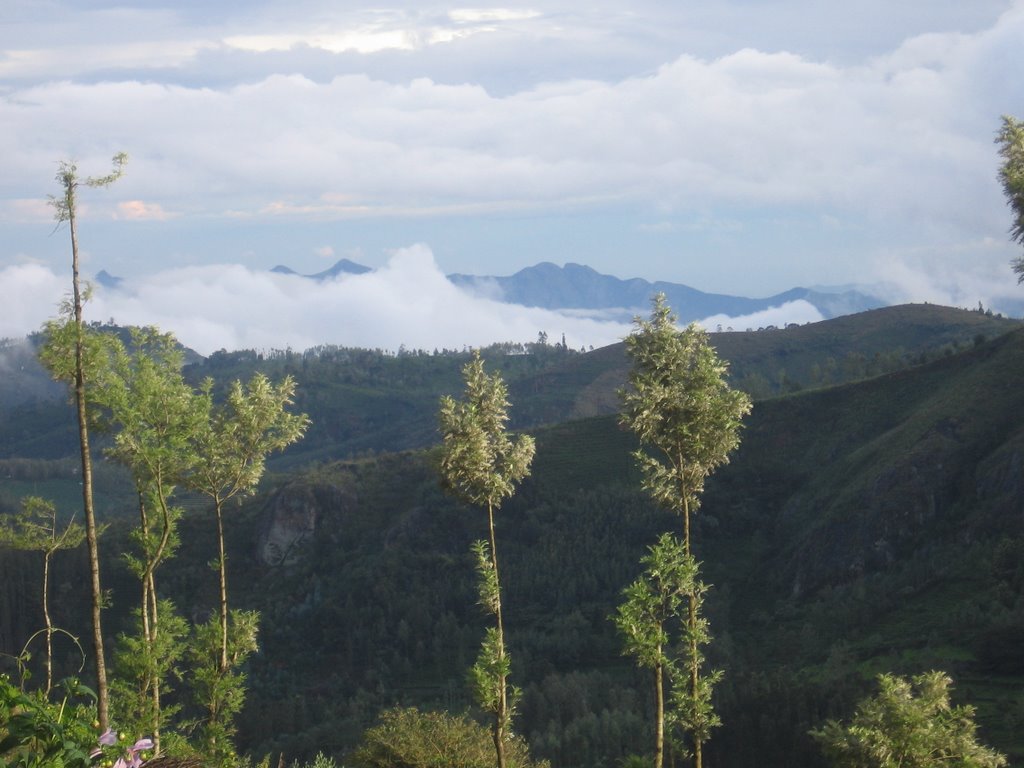
The view from their front door. Clouds and mountains, clouds like mountains.

Friday, October 06, 2006

Women Dance the KummiAdi

Here is the video:

Thursday, October 05, 2006

Village Festivals

Yesterday I went to the village of Vilaacheri, where I hope to start pottery lessons next week. I went because I was invited for a festival the name of which I'm not entirely clear on. The festival consisted of the following: Extremely loud film music played over gigantic loudspeakers, drunk men, millions of children, women dancing the KummiAdi, men shouting and whistling, and the procession of the village gods around the village on ceramic horses painted brightly and carried with long bamboo poles by 8 young men each. The village was festively decorated with streamers and each house had beautiful chalk paintings, called 'kolam' out front. Where the procession was set to begin, the women were dancing. Then when they finished, the men picked up the ceramic horses, beginning with the head god of the village, seated on the first horse, and processed to the main temple, and from there to each of the other temples in the town. It was fascinating, but also exhausting.

I also seem to be playing a small role in the politics of the village, since I have been befriended by a woman who is running for village president (what used to be called 'headman'). Her husband who is now dead was the headman many years back, and now she also has the desire to run for office. I was with her before the procession started, as we walked around the village, she greeted many people and introduced them to me. Whether she thinks her friendship with a foreigner will help her in any way, I can't really say. Whether it could actually help her get votes, I don't know. But there are seven people running for the position, so who's to say.

The women dancing the KummiAdi.

p.s. I have a video of the women dancing as well, but I'm still working on uploading it.

Monday, October 02, 2006

An Earth a Day

As another aside, if you have a minute check out this quiz that estimates your consumption on a world scale. It's depressing, but probably somewhat accurate.

In India, where I consume almost entirely local products, never drive a vehicle, walk or take the bus almost everywhere, etc. I still consume more than my share of the planet per population. In America, according to my normal American consumer habits it tells me that if everyone in the world lived like me, we would need 4.5 earths to support us all.
Check it out: Earthday.org Footprint Quiz

Off the beaten path... Kodumanal

Finally I was able to get to visit the site of my future research: Kodumanal.
I left Saturday morning on a train to the town of Erode. This cost 32 rupees. A bus to the even smaller town of Chennimalai (6 rupees), and from there a bus to the tiny village of Kodumanal (3 rupees). A chance to visit the site of my archaeological dreams? Priceless. Or well, nearly so, anyway.

The travel was uneventful save for the barrage of questions I usually get when people realize I speak some Tamil: Where is your native place? Why have you come to India? Why have you come here specifically? What do you do? What do you study (i.e. what degree)? What subject do you study? How old are you? Are you married? Do you have children? Do you have siblings? Are they married? Do they have children? What do your parents do? Will you get married? When? Do you have a groom already picked out? And sometimes questions like: Why do you have three piercings in one ear and only one in the other? Do you wear Indian clothes in America? Do you wear Sarees? Where do your parents live in the US? Is it a joint family? etc. etc. These questions I answered on the bus to several people on the way to the village and several times to different people in the village. Luckily, once I've told a few people, and they are around, whenever someone else comes by and starts asking the same questions, whoever I've already spoken with begins answering for me. What is especially fascinating is that everyone always asks the same set of questions. Sometimes they only ask the first three or four or five, but the order is almost always the same.
I was also questioned on the bus, as to whether I knew the address where I was going. And I didn't but I knew the name of the village, and the name of a man to talk to when I got there. I hoped that was enough.


Sure enough, I got off of the bus and asked for Mr. Somu and was directed towards a house. It turns out it wasn't Mr. Somu's house, but the house that Dr. Rajan had arranged for me to stay in for the night. They provided me with a bed and a meal, and were very hospitable and nice. Of course they too asked all the same questions, but I didn't mind. Theirs was a joint family, one grandmother, two sons, two daughters-in-law, and 2 grandsons, one for each couple. And they all lived under one roof. Anyway, they fed me a lovely dinner of rice, two kinds of vegetables, sambar, rasam and yogurt. It was delicious. Despite the fact that they had no running water, (a cistern over the kitchen sink and gravity provided it instead) they had a Sony Wega Trinitron TV, cable and a DVD player. So we watched a Tamil movie in the evening while the two two-year old boys played with their toy cars.
In the morning Mr. Somu came and got me and we went to check out the site.


There wasn't alot to see, especially in the habitation area. A mound was not especially apparent, although the scatter of pottery and the fine clear crystal debitage of bead making was very abundant. The trenches had all been filled in, and were not marked anywhere. And the whole thing was under cultivation. There was a lot more to see with the megaliths in the burial part of the site, although that too had been plowed at some point in the past. One large excavated megalith was left open, and I'm pictured below standing down inside it. A few others were apparent on the surface. Also, menhirs, or standing stones were still there and quite obvious. If there were really over 100 megaliths there when Rajan and the archaeologists studied the site nearly 20 years ago, many of them must be gone now, or are no longer visible on the surface.
In any case, it was immensely useful to get a first hand view of the site, rather than simply read about it or look at black and white pictures in a book. As you can see from below, the pictures are nice, but you still don't really get a sense of the whole thing. Of course it's spread out over 50 acres, or so Mr. Somu said.
Luckily I didn't fall in any more septic tanks... (there were several possible candidates, but I was adept at avoiding them.)


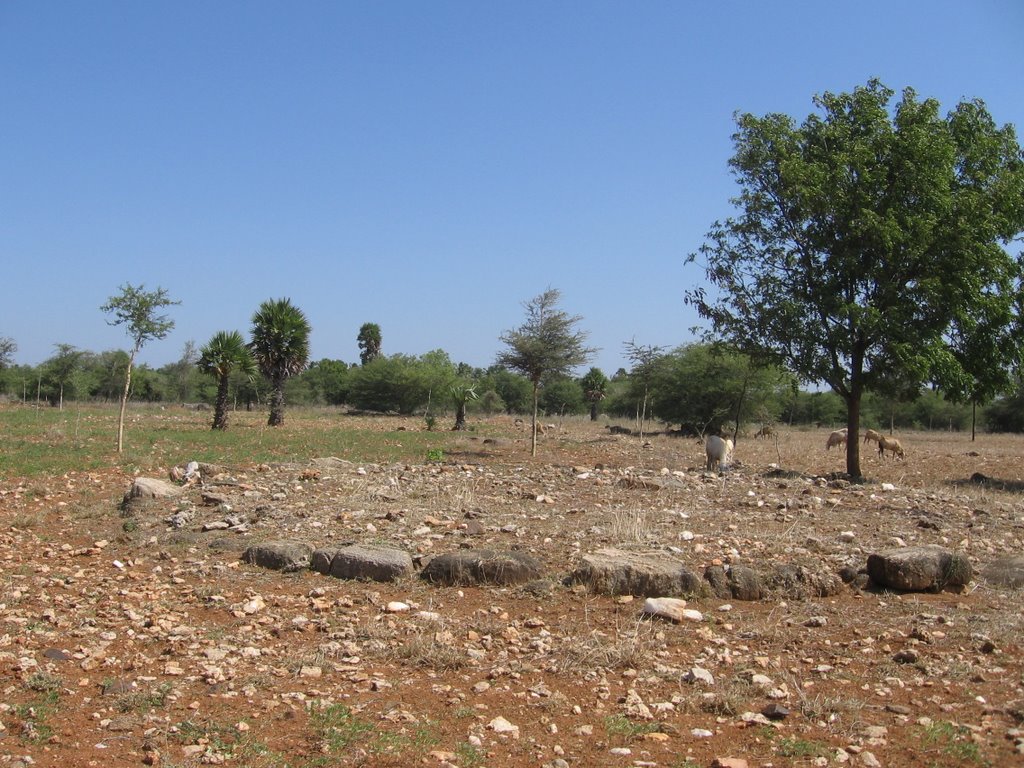
This is Kodumanal, the habitation site.


Me in front of the transepted cist of an excavated megalithic burial.


One of the stone circles, indicating a sub-surface burial.

Thursday, September 28, 2006

Deadly Virus Resurrected

This is a sort of fascinating article about the 1918 flu that killed so many people in Europe. Read it if you have a spare minute. :)

Resurrected virus shows how 1918 flu strain committed mass murder from PhysOrg.com

Scientists testing a resurrected version of the 1918 flu virus on lab mice believe the 20th-century's deadliest pathogen reaped its toll through a combination of runaway tissue inflammation and cell death.

[...]

Tuesday, September 26, 2006

How many pots could a potter pot if a potter could pot pots?

After visiting the church in Idaikattur, we went to the small town of Manamadurai to see a local pottery operation. The director of the Tamil program Dr. Bharathy knows my interest, and I think that was the main reason for that part of the journey. It was an amazing operation. They were organized as a cooperative, a number of families sharing facilities, and the work involved in firing. They also appeared to be involved in fairly large bulk production operation, and were in the process of loading the pots in to trucks with straw cushioning when we visited. They make a variety of vessels, although the proportions have changed. Ceramic cooking vessels are used in the home here only on special or ritual occasions, and small oil lamps for altars are common. But the largest volume is flower pots, which are all hand made.
I would have loved to have studied pottery there with them, especially because of the family environment, but it's really too far to travel from Madurai on a regular basis. Instead I'll be taking pottery lessons twice a week in the village of Vilaachery about 45 minute bus ride from my neighborhood.
I don't start classes until next week but I'm excited, and I'll post pictures, if I manage to make anything with any success.

A young girl making small oil lamps for use in temples and home altars for worshipping the various Hindu deities.
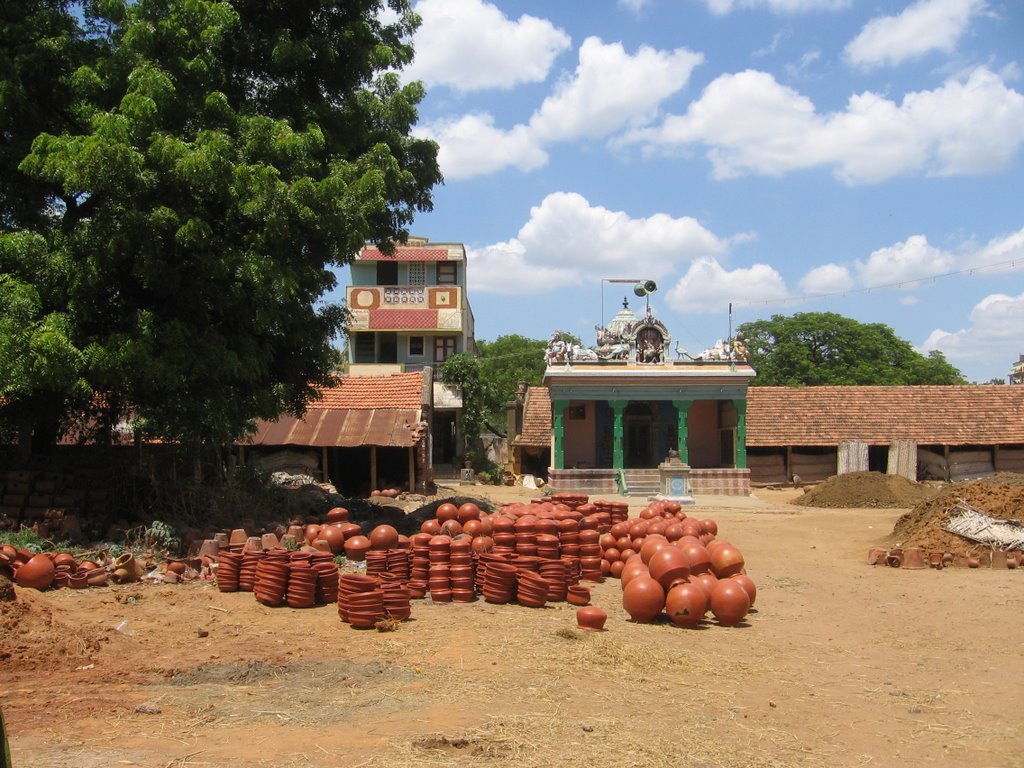

Large piles of pottery, finished and ready to ship.

Monday, September 25, 2006

Replicating Reims Cathedral

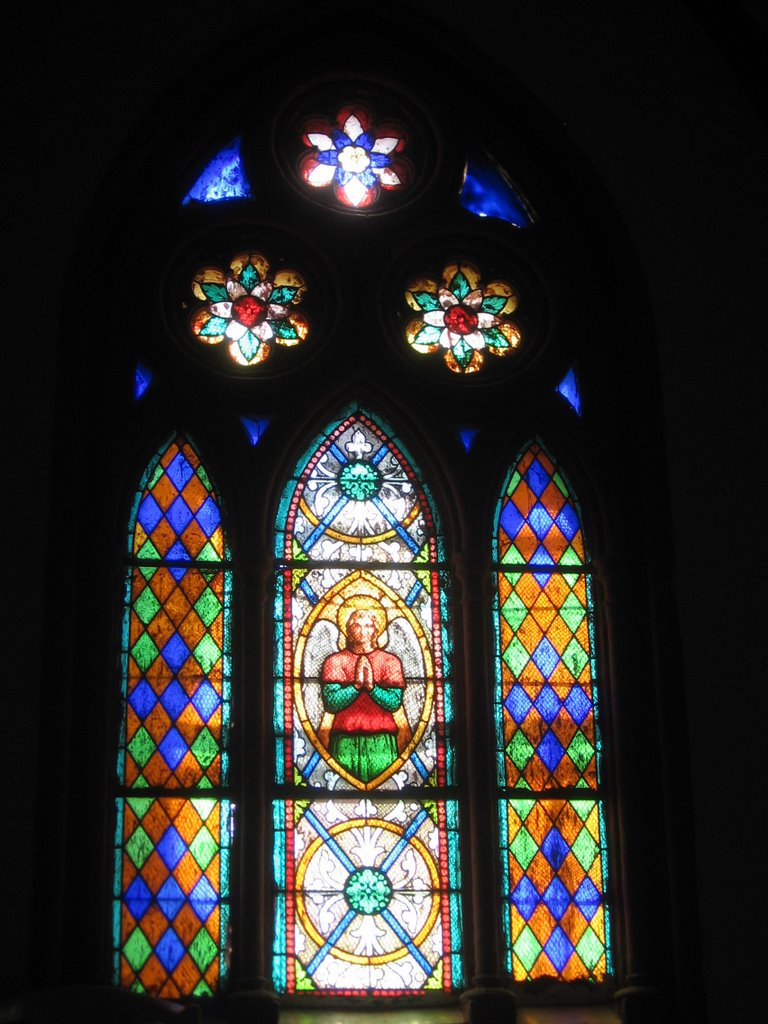
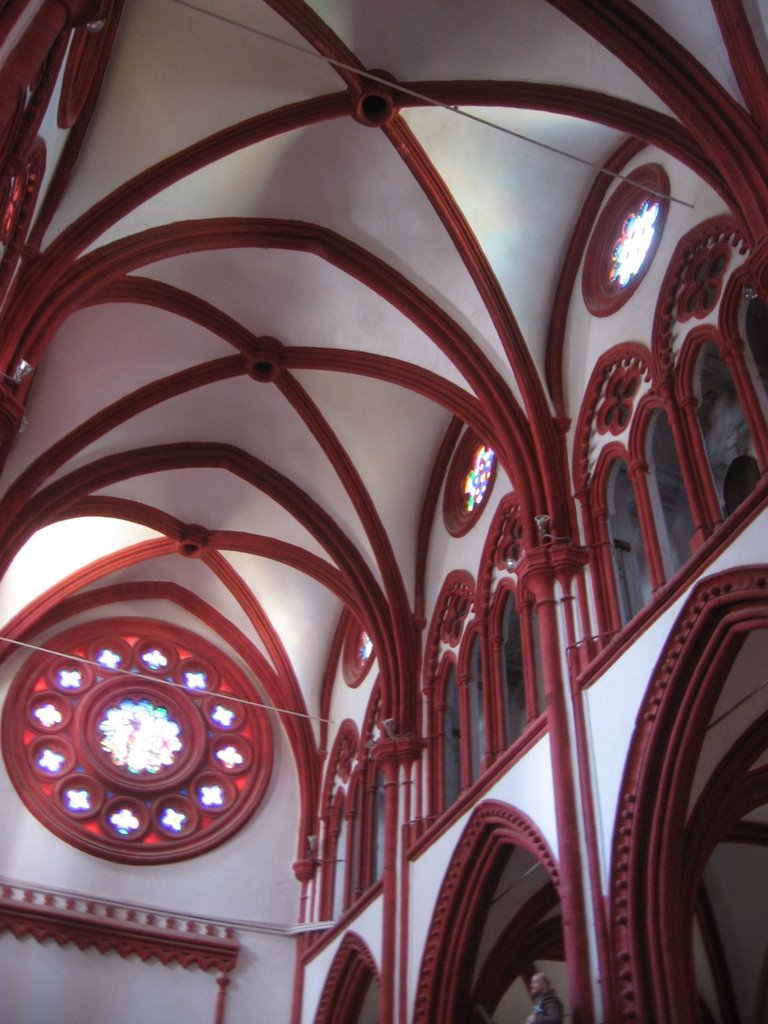
It was already sweltering hot when we four students piled into a jeep-like vehicle to visit the Reims Cathedral of the East. This impressive structure was built in 1894 by a French jesuit priest. He had wanted to built a church in the small village of Idaikattur in Tamil Nadu, but lacked the funds. And so, he went home to France for funding and found a protestant woman who had been miraculously cured of a heart ailment after praying to the Sacred Heart. She donated 2000 francs, which allowed the kindly French father to return to India to build his majestic cathedral, and in doing so encroach on a large section of the villagers land.

The villagers protested, but the Father had already laid the foundation, and refused to change his plans. The peasants took their case to court, and tried to prevent the building of the church. Though the Father's lawyer advised him to lie in order to win the case, the honest father refused. He had faith in the lord.

Then the judge had a dream, in it the church was being built by 153 angels. (He counted them all. How he could tell them apart I don't know. I always have trouble telling one angel apart from another.) In any case, the Judge found in favor of the father, and convinced the villagers to give up their land. The church was built. In it he installed sculptures of many saints, as well as the 153 angels. Whether they each sat for portraits individually, I don't know.

It was indeed quite beautiful. The stained glass and statues were imported from france although they decided pews were unnecessary as the villagers were used to sitting on the floor.


Friday, September 22, 2006

Pass the Roti

Ah, there's nothing better than a refreshing dose of bureaucracy. Today I decided to plan my travels outside of Madurai, to go visit my friends in Ooty, and to go to Hyderabad over my fall break. I started by looking at the newspaper to see which airlines were advertising the lowest rates. AirDeccan was advertising a rate from Hyderabad to Chennai for 74 Rupees, or about $1.85 plus taxes and fees. I went to their website to no avail, I tried every search possible and this fare did not exist. The actual rates were 700 Rupees, from Hyderabad to Chennai and 1500 from Chennai to Hyderabad. A round trip ticket costing about 5000 rupees with taxes and surcharges. This is ridiculous compared to train fares, so I decided to try booking train tickets online. The train ticket booking online doesn't allow for round trip tickets, and each leg had to be booked individually, with a service charge for using the internet booking facility. Because I had 6 separate journeys, I decided to give up and go to the railway reservation office, and despite having to fill out a separate form for each leg, I would probably get it done in better time. I also had received my ATM card from the State Bank of India, with a notification to obtain my pin by going to the branch office. I went to the bank to do this, and was informed by the security guard that I had to speak with the bank manager. Then he asked when I received the card, and I told him yesterday. He then informed me that the pin would not be available until Monday. I must come back then. I asked if I could speak with the bank manager anyway, and he said no, come back Monday.
No problem.
So then I had to wait in a 5 or 6 person line to withdraw cash from the bank without an ATM card, when woman carrying two two thousand rupee notes decided to cut to the front of the line, as if having large denominations of cash gave her that right. Even the man behind the counter yelled at her. He still took her in front of 4 other waiting people. After receiving my cash, I went to the railway reservation office, filled out 6 individual sheets for reservation requests with mostly redundant information. The only thing that changed was the date, and name and number of the train. Otherwise, I wrote the Class, number of berths, my full name, age, sex, berth preference, full address, telephone number, date and signature 6 times. But for 270 rupees I am going to Ooty to visit my friends for a weekend, and for another 850 rupees I am going to Chennai and Hyderabad for my break.
I know it will all be worth it in the end. On top of which I will have contributed to the archives of the Indian railway, which some future graduate student will surely study. If it doesn't all burn down. I mean, I think that amount of paper all held in one place has a natural tendency to spontaneously ignite.

On another note, my friend Vivek, and several of his friends have a blog about Indian politics and current events which is very informative. It can be found at www.passtheroti.com.

Wednesday, September 20, 2006

I guess I do have something to say after all...

For many years now I have resisted the idea of creating a blog, because, as I told people, I have nothing to say, and besides, no one would want to read it anyway. I have finally come to the point at which I don't really care if anyone reads it; and it turns out that I do have something to say after all.
This blog is the beginning of my commentary on events, politics, and my own personal experiences in the world, as strange and absurd as it may be.
Do I have any expertise, you may ask yourself. And I can say, no, probably not. Perhaps on some subjects.
And so I give you opinions, some justified, others not. I cannot promise to write without bias, since I think that's an impossible goal.

So I will quote Umberto Eco:
"I asked for a lawyer and they gave me an avocado."